1
/
of
1
Smith, Stephen Drury
Free All Along
Free All Along
Regular price
$22.70 CAD
Regular price
Sale price
$22.70 CAD
Quantity
Couldn't load pickup availability
Share
In 1964, Pulitzer Prize—winning author and poet Robert Penn Warren set out with a tape recorder to interview leaders of the civil rights movement. Warren was a Southern white man who opposed Jim Crow segregation. He wanted to find out, first hand, about the people behind the "Negro Revolution."
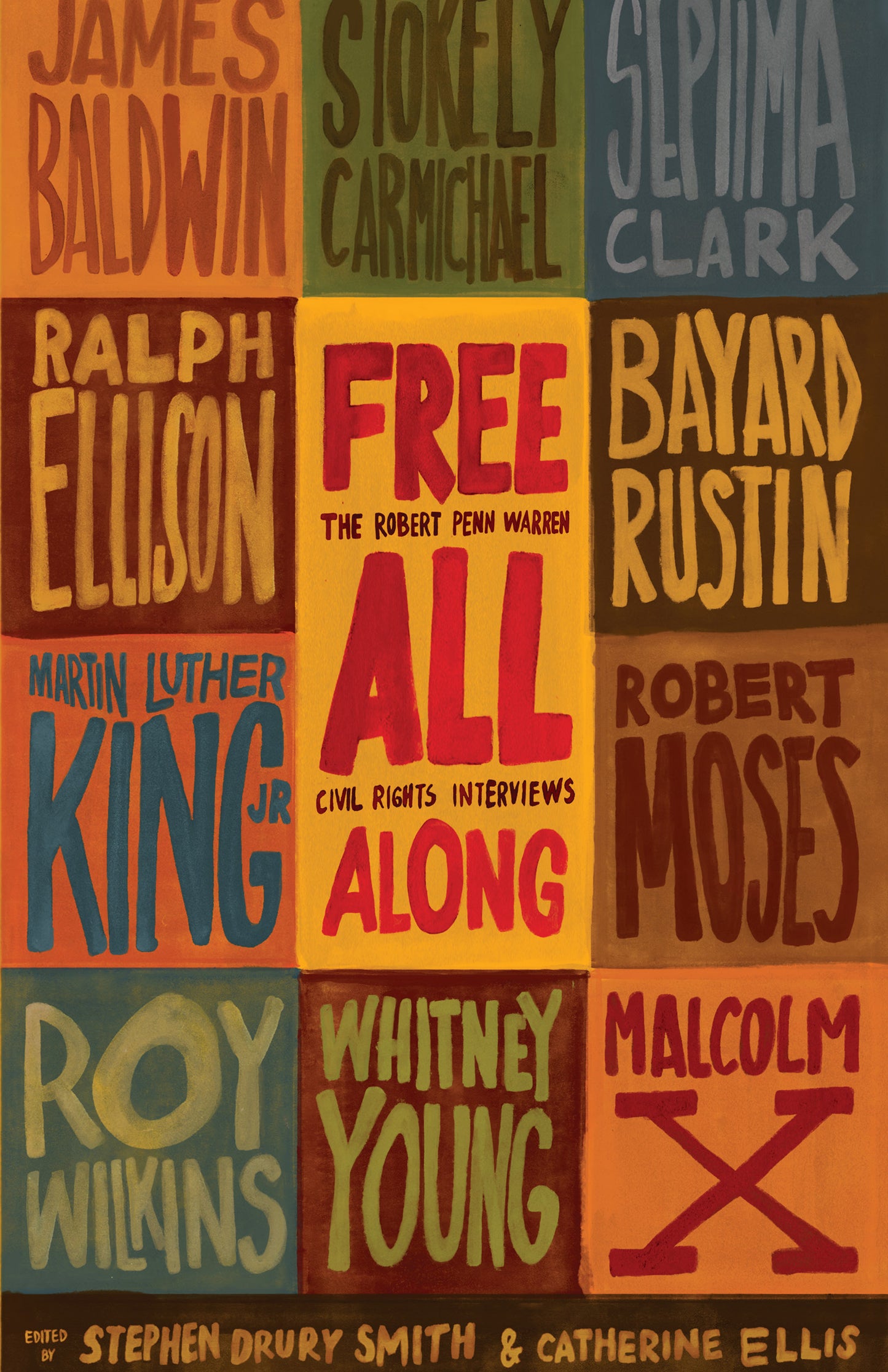
Over the course of several months, Warren traveled the murderous back roads of rural Mississippi with young voting rights activists. He interviewed the leading lights of the movement, such as Rev. Martin Luther King Jr., Stokely Carmichael, and Roy Wilkins. Up in Harlem, Warren sat down for a 15-minute appointment with Malcolm X that unwound into several hours of vivid conversation.
The interviews are frank and revealing, the work of an ambivalent southerner living in Connecticut. He was trying to understand the region he left behind, the country as a whole, and the African Americans who were fighting for change. It was also something of an act of personal contrition; as a young man, Warren had held conventionally racist views about the virtues of segregation.
When his 1964 journey was complete, Warren published his findings in Look magazine and in a 1965 book, Who Speaks for the Negro? Warren mixed short excerpts from his transcribed interviews with his own observations and essays to create a work of literary journalism that emerged from one of the most dramatic and significant periods of the civil rights timeline. Who Speaks for the Negro? is long out of print, familiar only to scholars of history and literature.
This book will present a carefully crafted selection of these remarkable conversations between one of America’s most revered writers and some of the most influential men and women of the freedom struggle. Warren was the first poet laureate of the United States and the only writer to have won a Pulitzer Prize both for fiction and (twice) for poetry. This collection will provide, for the first time, a comprehensive and accessible look at Warren’s project and the story of its making.
Over the course of several months, Warren traveled the murderous back roads of rural Mississippi with young voting rights activists. He interviewed the leading lights of the movement, such as Rev. Martin Luther King Jr., Stokely Carmichael, and Roy Wilkins. Up in Harlem, Warren sat down for a 15-minute appointment with Malcolm X that unwound into several hours of vivid conversation.
The interviews are frank and revealing, the work of an ambivalent southerner living in Connecticut. He was trying to understand the region he left behind, the country as a whole, and the African Americans who were fighting for change. It was also something of an act of personal contrition; as a young man, Warren had held conventionally racist views about the virtues of segregation.
When his 1964 journey was complete, Warren published his findings in Look magazine and in a 1965 book, Who Speaks for the Negro? Warren mixed short excerpts from his transcribed interviews with his own observations and essays to create a work of literary journalism that emerged from one of the most dramatic and significant periods of the civil rights timeline. Who Speaks for the Negro? is long out of print, familiar only to scholars of history and literature.
This book will present a carefully crafted selection of these remarkable conversations between one of America’s most revered writers and some of the most influential men and women of the freedom struggle. Warren was the first poet laureate of the United States and the only writer to have won a Pulitzer Prize both for fiction and (twice) for poetry. This collection will provide, for the first time, a comprehensive and accessible look at Warren’s project and the story of its making.